

A residual current operated circuit breaker (RCD) is an essential line-protection product in distribution circuits. It can rapidly disconnect a faulty power supply in a very short time, protecting people and electrical equipment. Standards specify clear requirements for the residual current trip characteristics of RCDs, primarily trip-current thresholds and operating times. Based on the type of residual current, RCDs can be classified as Type AC, Type A, Type F, or Type B. The standards specify different residual current trip characteristics for each RCD type. This article reviews the test requirements for the different types of RCDs and summarizes the resulting output-capability requirements for residual current test equipment.
For convenience, several abbreviations are used in this article. Their meanings are provided below:
A0 Half-wave current waveform with a 0° trigger phase angle
A90 Half-wave current waveform with a 90° trigger phase angle
A135 Half-wave current waveform with a 135° trigger phase angle
2PDC Current waveform produced by a two-phase rectifier circuit
3PDC Current waveform produced by a three-phase rectifier circuit
SDC DC current
F-I Composite current waveform related to IC-CPD testing
F-B Composite current waveform related to circuit breaker testing
The test requirements primarily reference the following standards: IEC 61008-1:2012, IEC 61009-1:2012, IEC 62423:2009, IECEE OD-5014 Edition 1.1 2019-06
Relationship among the residual current trip characteristics of different RCD types.
For RCD residual current test requirements, Type B requirements include Type F requirements, Type F requirements include Type A requirements, and Type A requirements include Type AC requirements, as shown below.
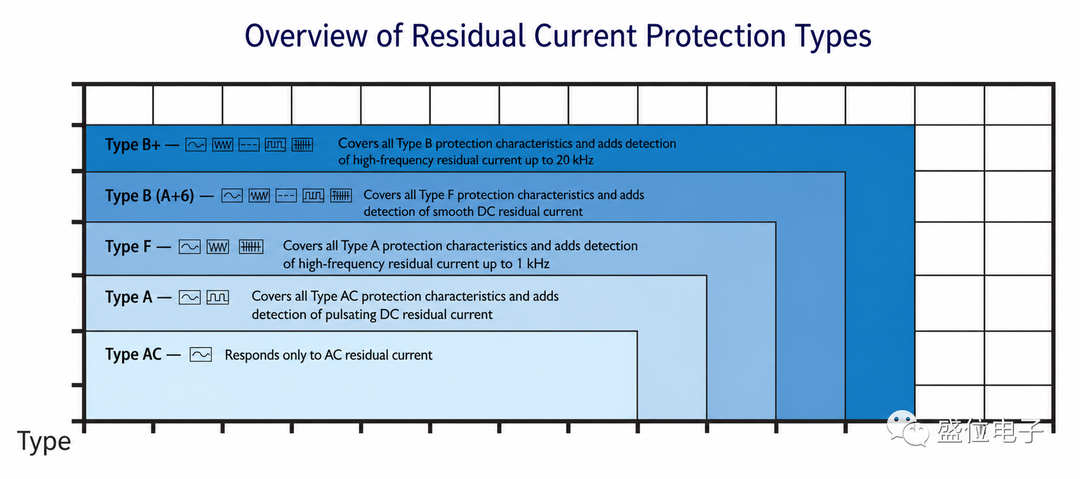
Relationship among the residual current trip characteristics of different RCD types · Figure 1

Output Capability
1. Test requirements for RCD residual current trip values
The standards specify a range for RCD residual current trip values, and the device under test must trip within that range.
The current output by the test equipment must ramp from 0mA or a relatively small value to the target value at the specified rate, and the equipment must be able to record the trip-current value.
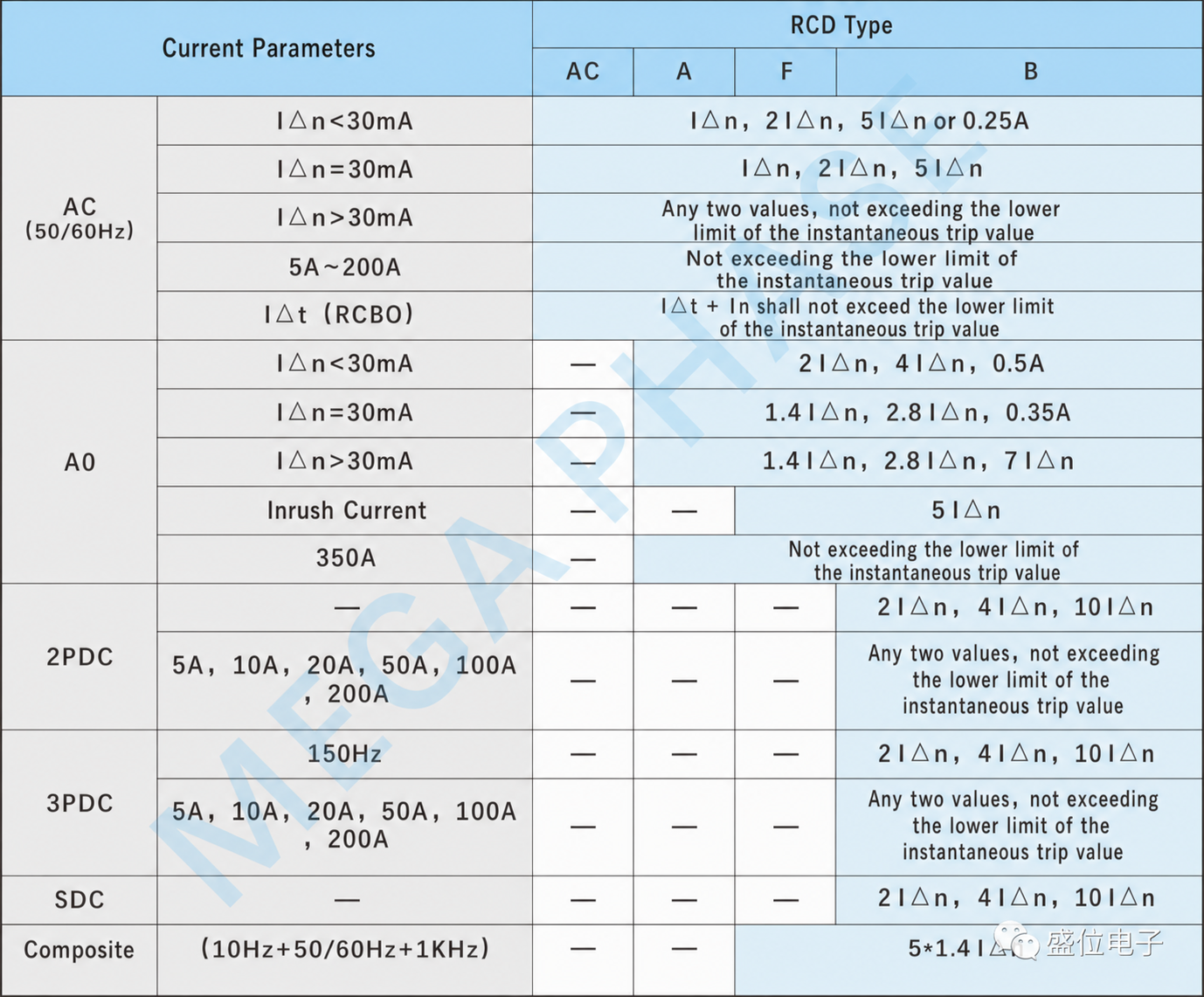
Required range for RCD residual current trip values · Table 1
2. Current to be applied when testing RCD operating time with suddenly applied current
The parameters in the table below are the current values to be applied as suddenly applied current. The yellow section identifies test items related to the lower limit of the circuit breaker's instantaneous trip current.
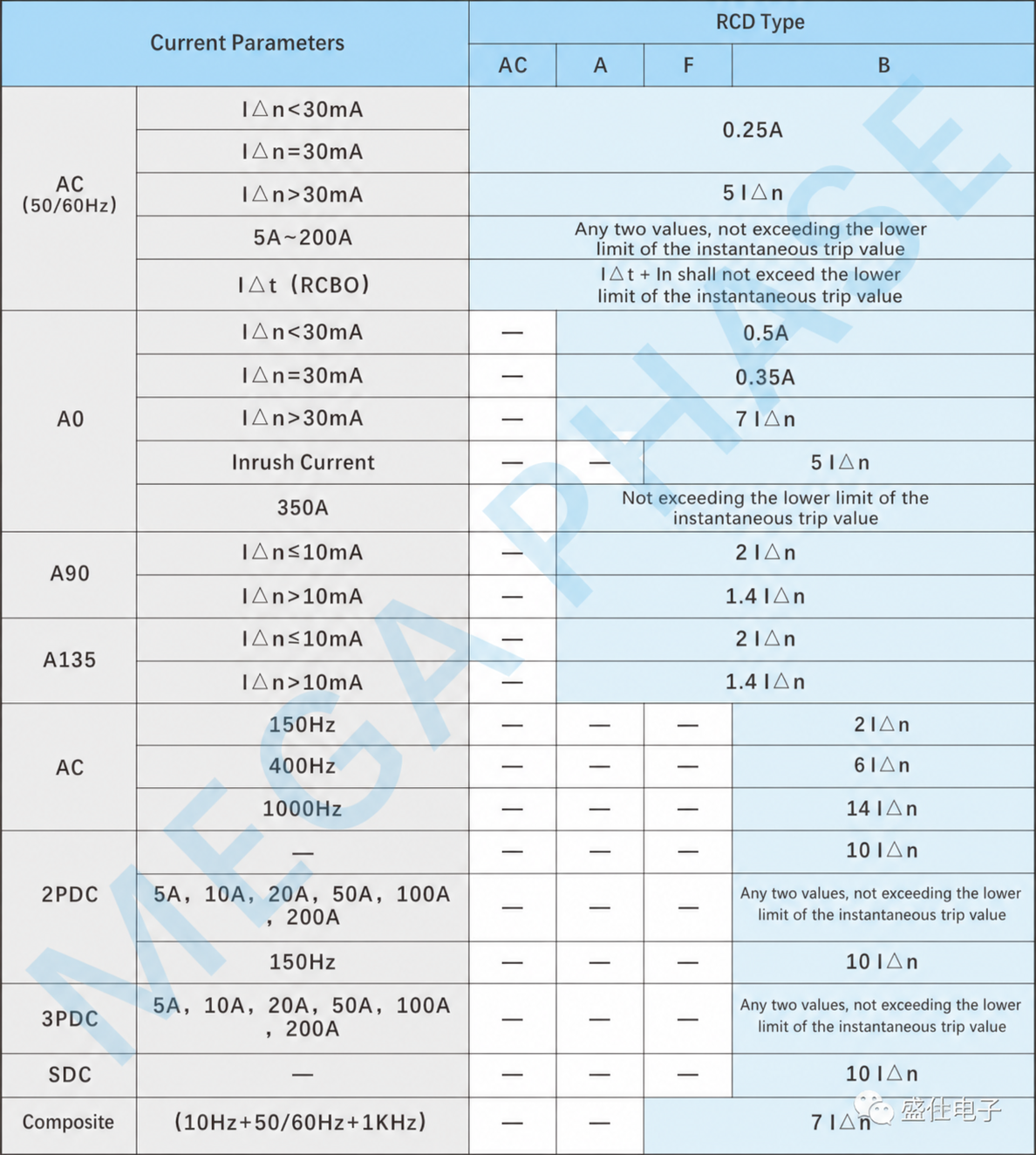
Current values to be applied as suddenly applied residual current · Table 2
3. Based on Tables 1 and 2, the maximum residual current to be applied for each current parameter can be summarized as shown in Table 3.
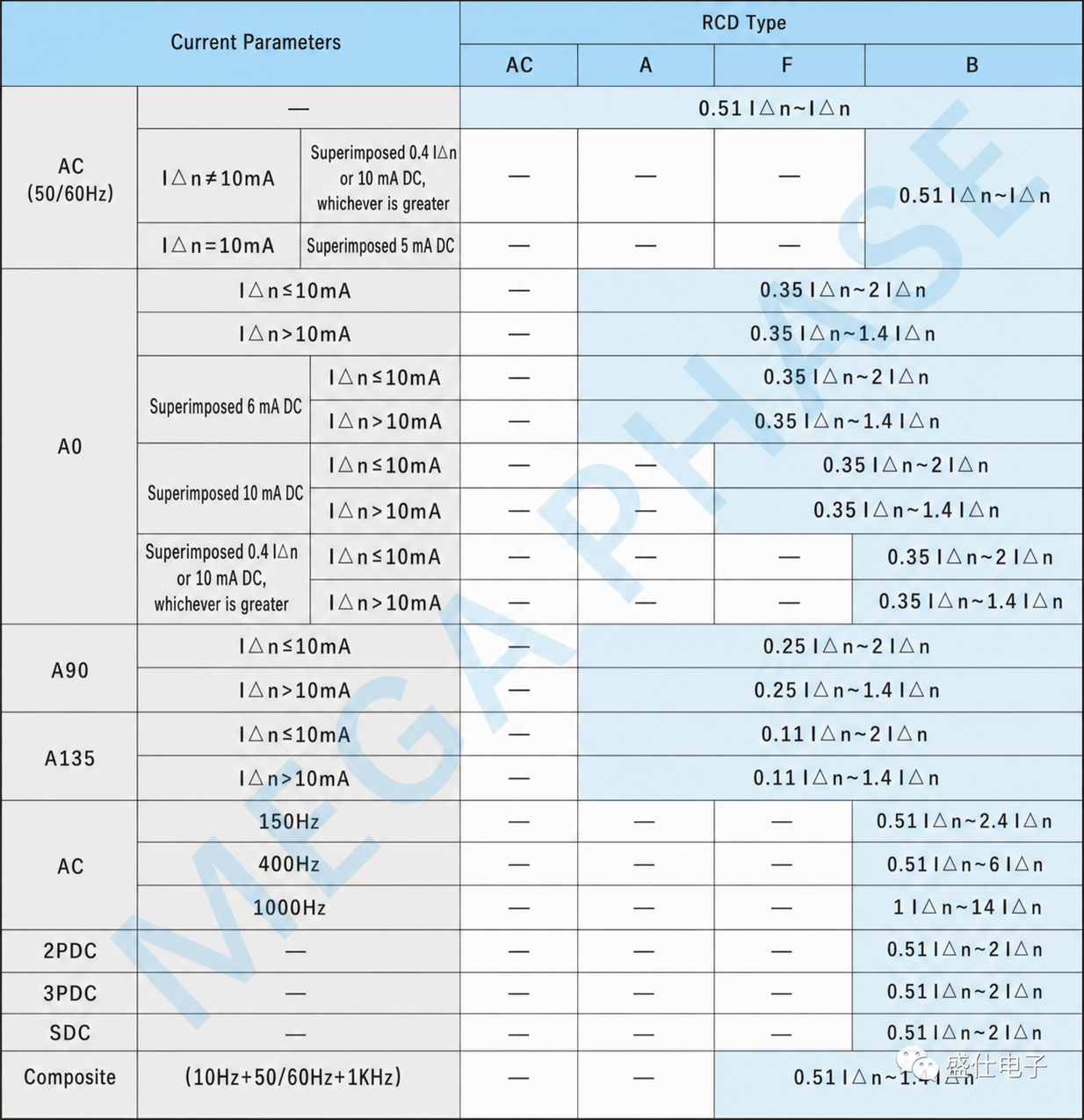
Maximum current to be applied for residual current trip characteristic tests · Table 3
Test Accuracy
Requirements related to residual current test accuracy
The key considerations when selecting residual current test equipment can therefore be summarized as follows:
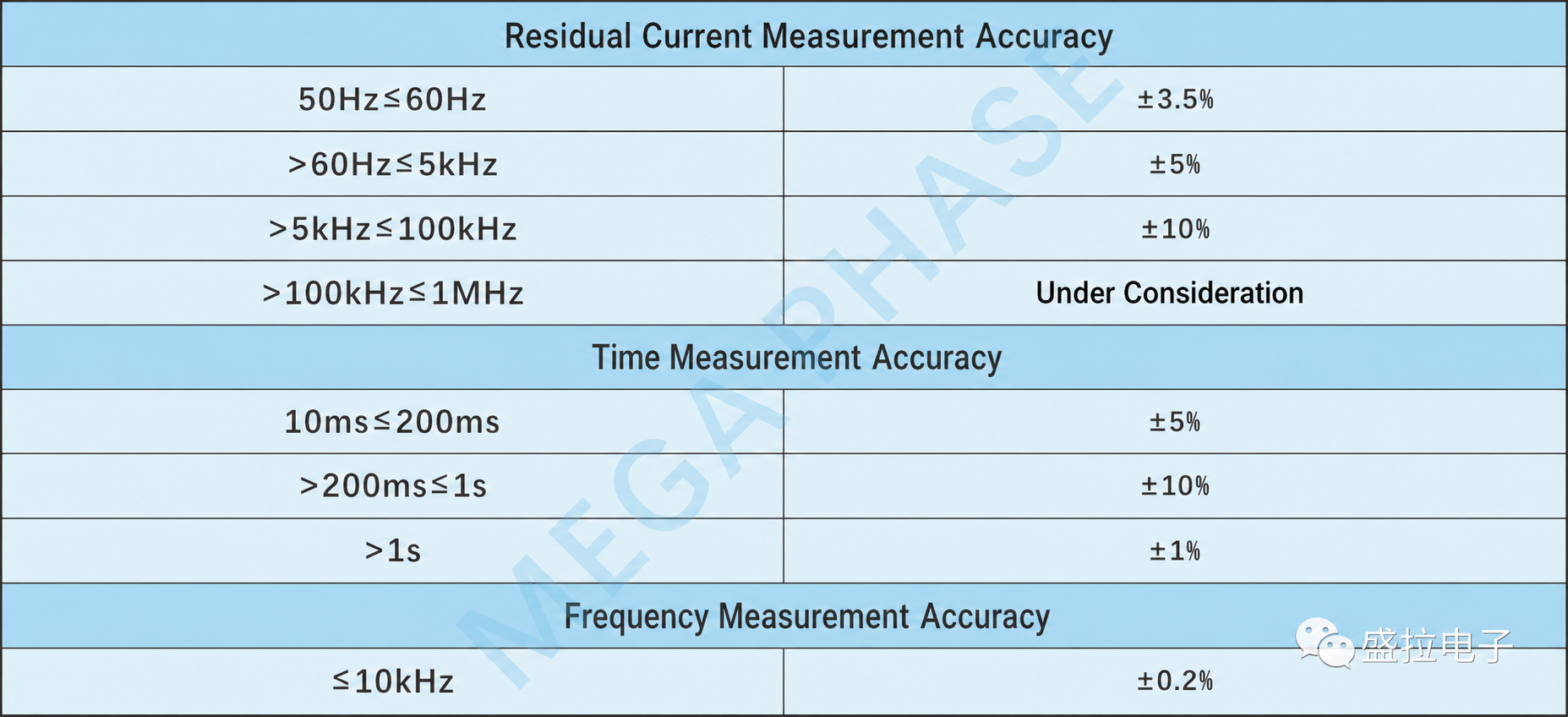
Residual current test accuracy requirements · Table 4
The accuracy of the current actually applied depends on the accuracy of the measuring instrument. Our current output accuracy must therefore meet the parameter requirements in Table 4.
Measurement Equipment
Selecting appropriate measurement equipment
The key considerations when selecting residual current test equipment can therefore be summarized as follows:
1 The output current waveform meets the requirements
2 The output current magnitude meets the test requirements
3 The output current accuracy meets the requirements
4 The output current frequency meets the test requirements
5 The output current frequency accuracy meets the requirements
6 The time measurement accuracy meets the requirements
Users can select test equipment based on the parameters listed in Tables 3 and 4.
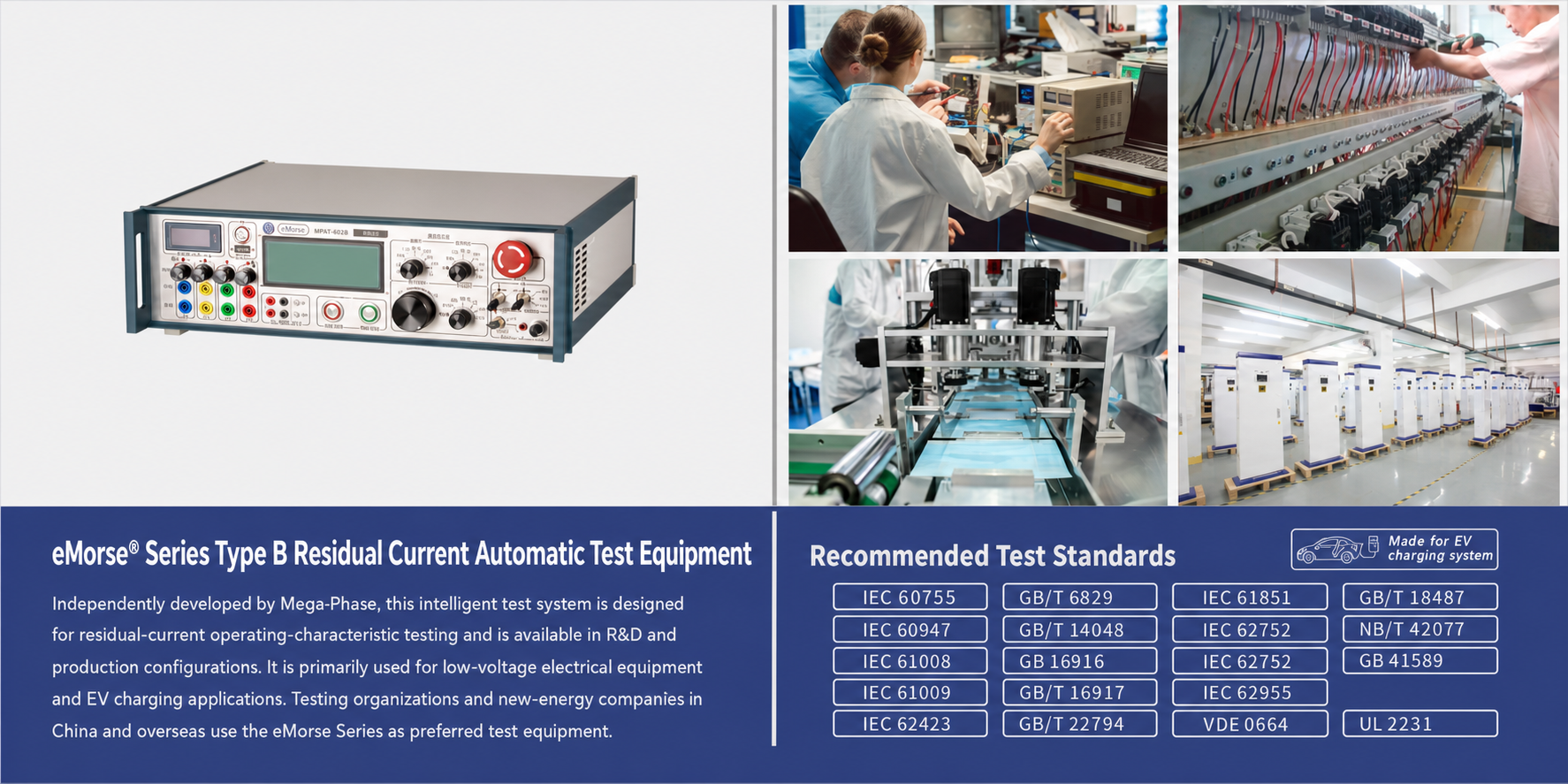
The eMorse™ Series residual current test benches developed and manufactured by Mega-Senway are widely used in the industry. They cover the test requirements of RCD standards, with multiple models available based on current output capability.
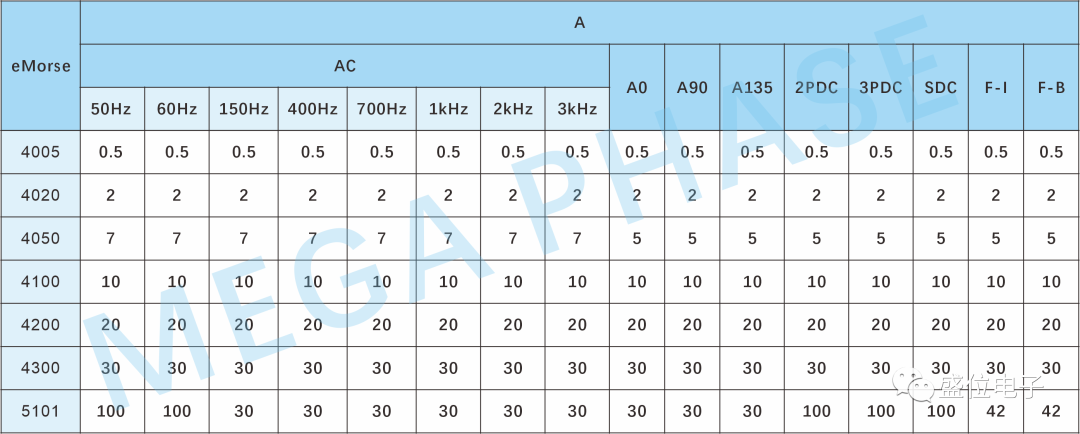
eMorse residual current test bench output capability · Table 5
IEC 61009 specifies the following standard rated residual operating current values (IΔn): 6mA, 10mA, 30mA, 100mA, 300mA, and 500mA.
Note: In South Korea and Japan, 15mA, 200mA, and 1A are also considered standard values.
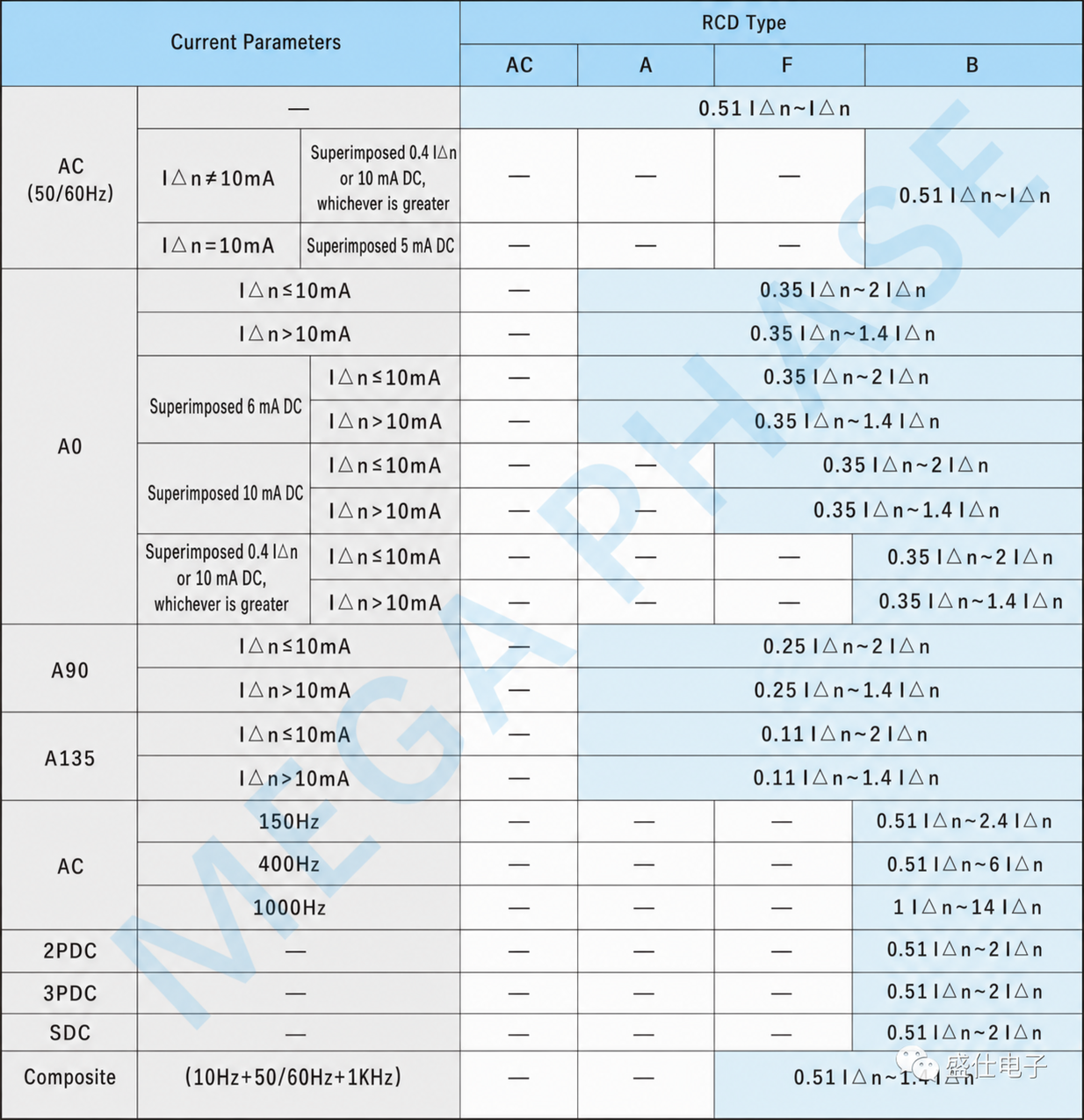
Maximum ramped and suddenly applied current values for Type B residual current trip characteristic tests · Table 6
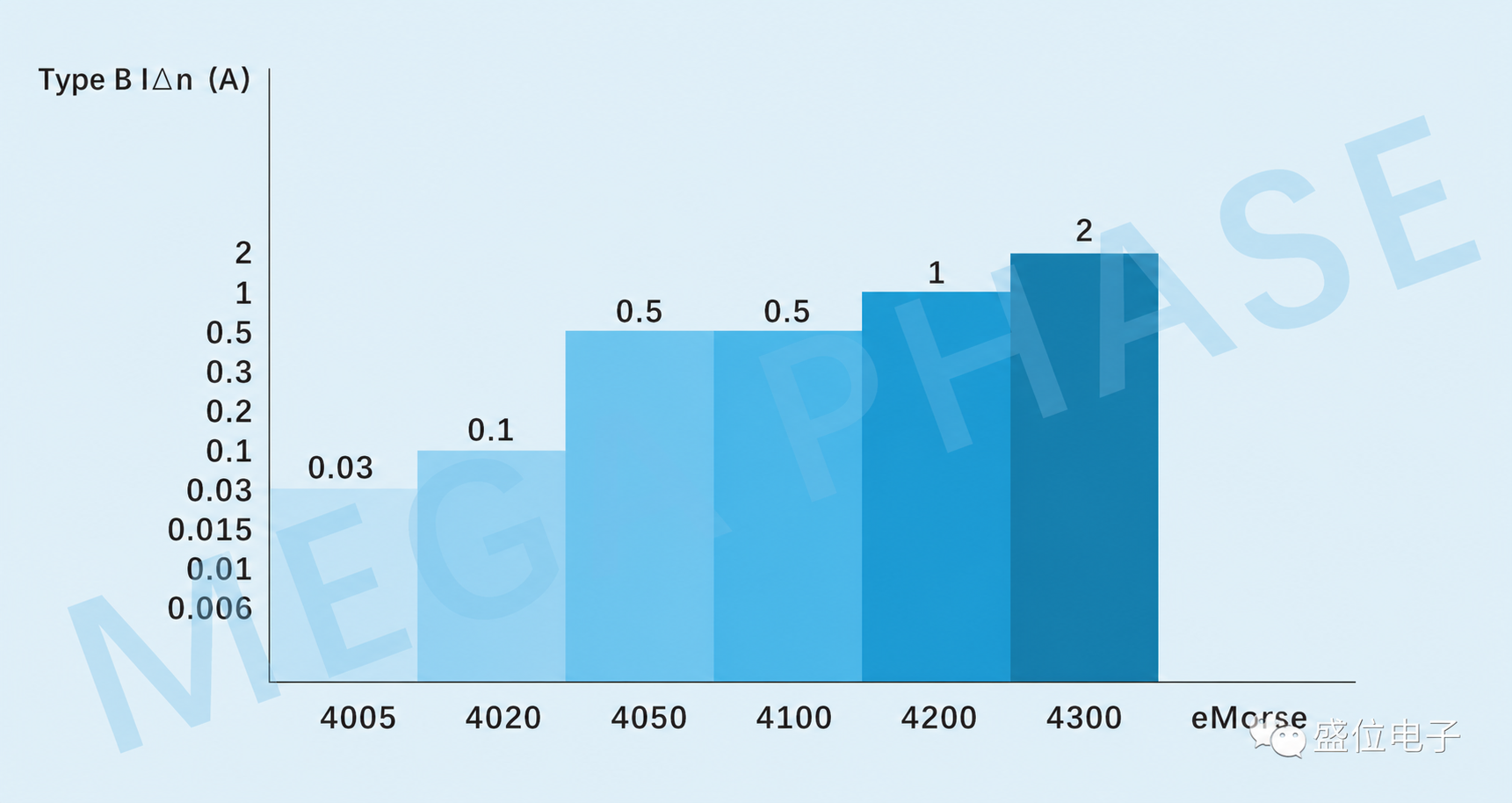
eMorse residual current test bench selection reference · Figure 2
2. Consider residual current test items related to instantaneous current (excluding IΔt)
The eMorse-5501 can be selected. Its maximum suddenly applied residual current capability is 500A, with a maximum current application time of 200ms. It can cover all residual current test items for Type B IΔn≤500mA (excluding IΔt):
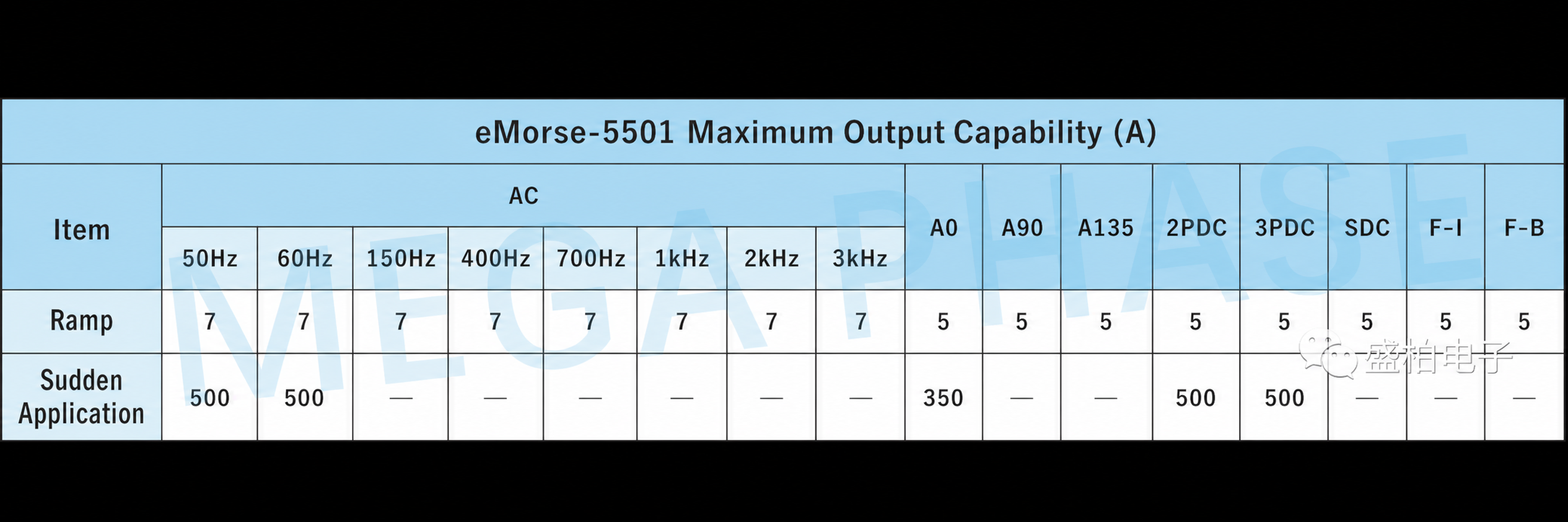
500A residual current test bench output capability · Table 7
Related information: Type B leakage current, Type B residual current, IC-CPD, Type A+6 leakage current, Type A+6 residual current, MC00, Type B, European-standard leakage protection, U.S.-standard leakage protection, onboard leakage current
Service Hotline:
021-52212989
18221792228

Service Hotline:
021-52212989
18221792228